




Nissan Frontier: Supplemental Restraint System (SRS)
- Precautions on SRS
- NISSAN Advanced Air Bag System (front seats)
- Front passenger air bag and status light
- Driver and front passenger supplemental knee air bag
- Supplemental air bag warning labels
Precautions on SRS
Basic Information
This section of the Nissan Frontier manual provides essential safety information about the Supplemental Restraint System (SRS), which is designed to work together with seat belts to enhance occupant protection during certain types of collisions.
The SRS in the Nissan Frontier includes the following key components:
- Driver and front passenger front-impact supplemental air bags (NISSAN Advanced Air Bag System)
- Front seat-mounted side-impact supplemental air bags
- Roof-mounted curtain side-impact and rollover supplemental air bags
- Driver and front passenger supplemental knee air bags
- Seat belts equipped with pretensioners (front and rear outboard seating positions)
Supplemental front-impact air bag system
The NISSAN Advanced Air Bag System in the Nissan Frontier is designed to help reduce the force of impact to the head and chest of the driver and front passenger during certain frontal collisions. It operates in conjunction with seat belts to provide enhanced protection.
Front seat-mounted side-impact supplemental air bag system
This system is engineered to help protect the chest area of the driver and front passenger in certain side-impact collisions. In the Nissan Frontier, these side air bags deploy on the side where the vehicle experiences impact.
Roof-mounted curtain side-impact and rollover supplemental air bag system
The curtain air bag system in the Nissan Frontier is designed to provide additional head protection for occupants in both front and rear outboard seating positions. In side collisions, the curtain air bags deploy on the impacted side. In rollover situations, they are designed to inflate and remain deployed for a short duration to help protect occupants.
Driver and front passenger supplemental knee air bags
These air bags help reduce impact forces to the lower body area, specifically the knees, of the driver and front passenger during certain collisions in the Nissan Frontier.
The Supplemental Restraint System in the Nissan Frontier is not a replacement for seat belts. Instead, it is designed to supplement the protection provided by properly worn seat belts. All occupants must always wear seat belts and maintain a proper seating position at a safe distance from the steering wheel, instrument panel, and doors.
The supplemental air bags in the Nissan Frontier operate only when the ignition switch is in the ON position.
After turning the ignition ON, the supplemental air bag warning light will illuminate and then turn off after approximately 7 seconds if the system is functioning correctly.
WARNING
- The front air bags in the Nissan Frontier typically do not deploy during side impacts, rear impacts, rollover events, or minor frontal collisions. Always wear your seat belt to reduce the risk of injury in all types of accidents.
- The front passenger front air bag and knee air bag will not deploy if the passenger air bag status light is illuminated or if the front passenger seat is unoccupied.
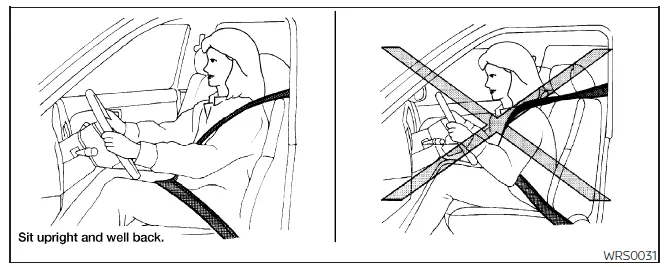
- Seat belts and front air bags are most effective when you are seated
upright and positioned well back in the seat.
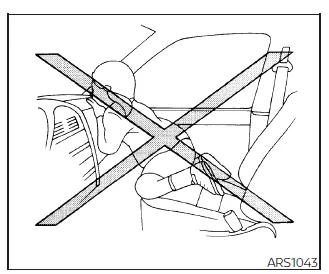
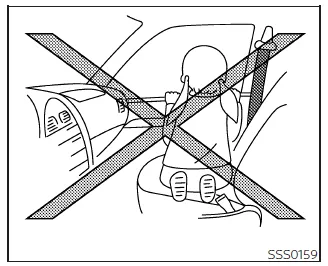
The front air bags deploy with significant force. Even with the advanced system in the Nissan Frontier, improper seating—such as leaning forward, sitting sideways, or being out of position—can greatly increase the risk of serious injury or death. Always maintain proper posture and wear your seat belt correctly.
- The seat belt buckle sensors in the Nissan Frontier detect whether occupants are properly restrained. The system evaluates collision severity and seat belt usage to determine appropriate air bag deployment. Failure to wear a seat belt correctly increases the risk of injury.
- The front passenger seat includes an occupant classification system with weight sensors that may deactivate the front passenger air bag and knee air bag under certain conditions. Improper seating position or failure to wear a seat belt can increase injury risk.
- Always keep your hands on the outer rim of the steering wheel. Placing your hands inside the wheel can increase the risk of injury if the air bag deploys.
WARNING
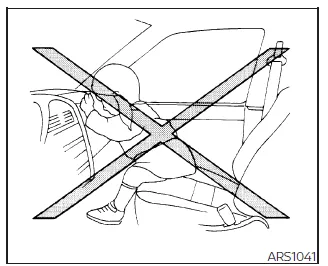
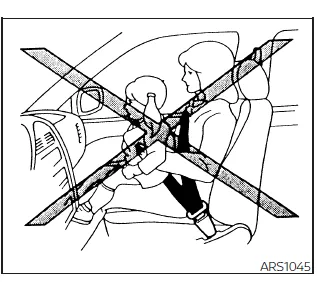
- Never allow children to ride unrestrained in the Nissan Frontier. Do not allow them to lean out of windows or sit in unsafe positions. Holding a child in your arms is not a safe alternative and may result in serious injury in an accident.
WARNING
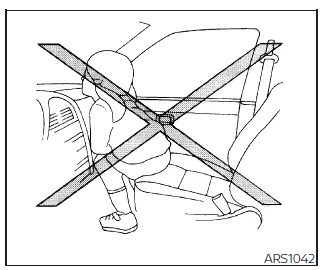
- Children are at high risk of injury if not properly restrained when air bags deploy. In the Nissan Frontier, all children should be seated in the rear seats and secured using appropriate child restraint systems whenever possible.
WARNING
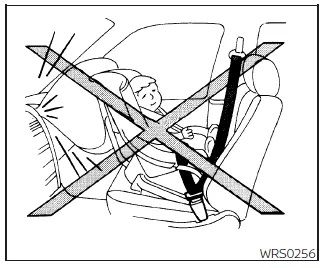
- Even with the advanced air bag system in the Nissan Frontier, never install
a rear-facing child restraint in the front passenger seat.
If the front air bag deploys, it can cause severe or fatal injuries to the child.
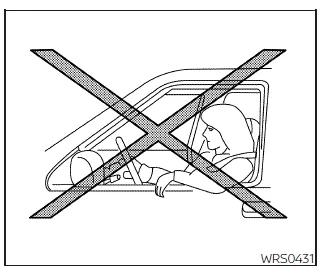
Do not lean against the door.
WARNING
Front seat-mounted side-impact air bags and roof-mounted curtain air bags:
- These air bags in the Nissan Frontier generally do not deploy during frontal impacts, rear impacts, or minor side collisions. Always wear seat belts to reduce injury risk.
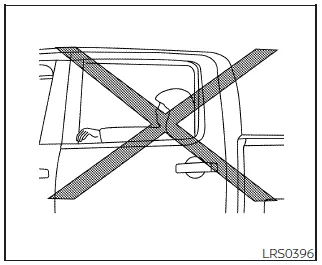
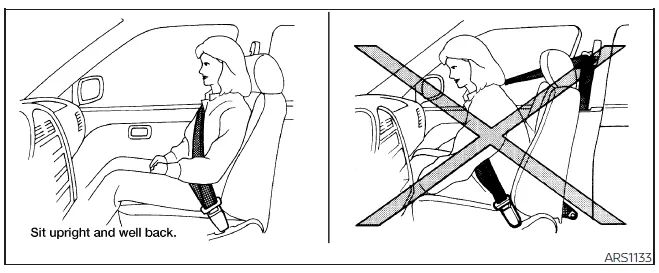
Do not lean against doors or windows.
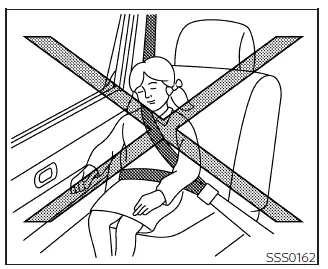
Do not lean against doors or windows.
WARNING
- The seat belts, side air bags, and curtain air bags in the Nissan Frontier
are most effective when occupants are seated upright with their backs against
the seatback.
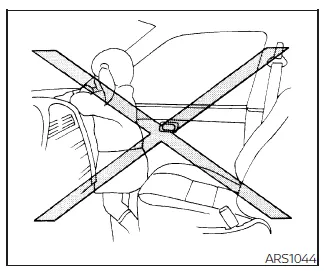
These systems deploy with significant force. Do not allow hands, legs, or faces near the side air bag areas or roof rails. Passengers should not lean against doors or extend body parts outside the vehicle.
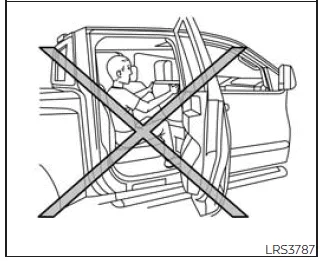
WARNING
- Rear seat passengers in the Nissan Frontier should never hold onto the
front seatback. If a side air bag deploys, serious injury may occur. Children
must always be properly restrained.
Examples of unsafe seating positions are illustrated above.
- Do not install seat covers on front seatbacks, as they may interfere with proper deployment of side air bags in the Nissan Frontier.
NISSAN Advanced Air Bag System (front seats)
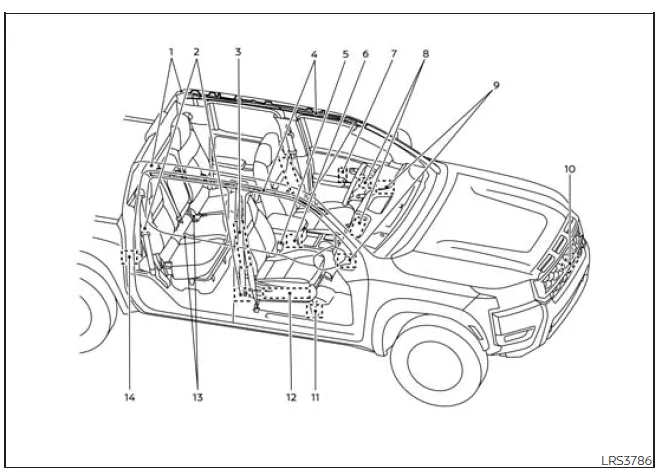
Basic Information
- Roof-mounted curtain side-impact and rollover supplemental air bag inflators
- Seat belt with pretensioners (front and rear outboard seating positions)
- Front seat-mounted side-impact supplemental air bag modules
- Roof-mounted curtain side-impact and rollover supplemental air bags
- Front seat belt buckle switches
- Air bag Control Unit (ACU)
- Front door satellite sensors (driver and passenger sides)
- Supplemental front-impact air bag modules
- Driver and front passenger supplemental knee air bags
- Crash zone sensor
- Occupant classification system control unit
- Occupant classification sensors (weight sensors)
- Rear seat belt buckle switches
- Additional satellite sensors (if equipped)
WARNING
To ensure correct and reliable operation of the passenger-side NISSAN Advanced Air Bag System in the Nissan Frontier, always follow these important precautions.
- Do not allow passengers in the rear seats to push or pull on the front seatback pocket, as this may interfere with sensor readings.
- Avoid placing heavy objects exceeding 9.1 lbs (4 kg) on the seatback, head restraint, or inside the seatback pocket in the Nissan Frontier.
- Ensure that nothing is pressing against the rear of the front passenger seatback, including child restraints or stored items on the floor.
- Do not place any objects under the front passenger seat, as this may affect the occupant classification system.
- Make sure there are no objects positioned between the seat cushion and the center console or between the seat cushion and the door.
- If installing a forward-facing child restraint in the front passenger seat of the Nissan Frontier, ensure it does not contact the instrument panel. Contact with the panel may cause the system to incorrectly detect occupancy and allow air bag deployment when it should be suppressed.
- Always verify system status using the front passenger air bag status indicator light.
- If the air bag status light does not operate as described, have the occupant classification system inspected. It is recommended to visit an authorized NISSAN dealer.
- Until proper system operation is confirmed, all passengers should be seated in the rear seats of the Nissan Frontier whenever possible.
- Do not adjust the front passenger seat so that it contacts the rear seat. This may trigger a system malfunction and cause warning lights to illuminate.
This Nissan Frontier is equipped with the advanced air bag system for both driver and front passenger seats. The system is engineered to comply with U.S. safety standards and is also approved for use in Canada. All warnings and instructions in this manual must be followed to ensure proper system operation.
The driver air bag is located in the center of the steering wheel, while the front passenger air bag is mounted in the dashboard above the glove box. In the Nissan Frontier, these air bags are designed to deploy in higher-severity frontal collisions, although deployment may occur in other types of impacts with similar force levels.
It is important to understand that visible vehicle damage does not always indicate whether the air bag system has functioned correctly.
The NISSAN Advanced Air Bag System in the Nissan Frontier continuously monitors input from multiple sensors, including the crash zone sensor and the Air bag Control Unit (ACU), to determine when deployment is necessary.
Deployment decisions are based on collision severity, seat belt usage, and—on the passenger side—the occupant classification system.
Depending on crash conditions, only one front air bag may deploy. This is normal and does not indicate a malfunction.
The front passenger air bag and supplemental knee air bag in the Nissan Frontier may automatically deactivate under certain conditions. This depends on the detected weight on the seat and how the seat belt is used. When these air bags are deactivated, the front passenger air bag status light will illuminate.
If the seat is empty, the light may remain off even though the air bag is disabled.
If you have any concerns about the air bag system in your Nissan Frontier, it is recommended to consult an authorized NISSAN dealer. If modifications are required due to medical or physical conditions, NISSAN can also provide guidance.
When an air bag deploys in the Nissan Frontier, a loud noise may occur followed by the release of smoke. This smoke is not harmful and does not indicate fire. However, it may cause temporary irritation, so occupants should avoid inhaling it and seek fresh air if necessary.
Air bags, in combination with properly worn seat belts, help reduce impact forces on the upper body. While they can significantly improve safety and reduce injury severity, they may also cause minor abrasions or injuries during deployment.
It is important to note that front air bags do not restrain the lower body. Therefore, proper seat belt use remains essential in the Nissan Frontier.
Even with the advanced system, occupants should always sit upright and maintain as much distance as practical from the steering wheel and instrument panel. Because air bags deploy rapidly, being too close can increase the risk of injury.
After deployment, front air bags in the Nissan Frontier deflate quickly.
The front air bags operate only when the ignition switch is in the ON position.
After switching the ignition ON, the supplemental air bag warning light will illuminate and then turn off after approximately 7 seconds if the system is functioning correctly.
Front passenger air bag and status light
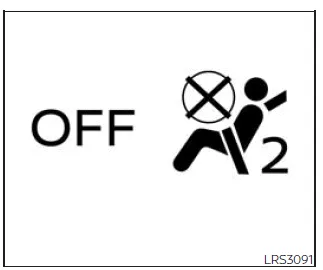
WARNING
In the Nissan Frontier, the front passenger air bag and the front passenger supplemental knee air bag are designed to automatically switch OFF under specific conditions. It is essential to understand how this system operates to ensure maximum safety.
Proper use of the seat, seat belt, and child restraint systems in the Nissan Frontier is critical. Failure to follow all safety instructions in this manual may increase the risk of serious injury or death in the event of an accident.
Status light
The front passenger seat in the Nissan Frontier is equipped with an advanced occupant classification system that uses weight sensors to determine whether the air bag should be activated or deactivated.
The system continuously monitors the load applied to the seat and automatically turns the front passenger air bag and the front passenger supplemental knee air bag ON or OFF accordingly.
The current status is displayed by the front passenger air bag status light
 located on the instrument panel.
After switching the ignition of the Nissan Frontier to the ON position, the status light will illuminate for approximately 7 seconds and then either turn OFF or remain illuminated depending on the detected seat condition.
The system operates as follows:
Condition: Empty front passenger seat
- Passenger Air Bag Status Light
 :
ON (illuminated)
:
ON (illuminated) - Front Passenger Air Bag and Front Passenger Supplemental Knee Air Bag Status: INHIBITED (disabled)
Condition: Bag, child, child restraint, or small adult in front passenger seat
- Passenger Air Bag Status Light
 :
ON (illuminated)
:
ON (illuminated) - Front Passenger Air Bag and Front Passenger Supplemental Knee Air Bag Status: INHIBITED (disabled)
Condition: Adult in the front passenger seat
- Passenger Air Bag Status Light
 :
OFF (not illuminated)
:
OFF (not illuminated) - Front Passenger Air Bag and Front Passenger Supplemental Knee Air Bag Status: ACTIVATED
In the Nissan Frontier, certain objects placed on the front passenger seat may also influence the system’s behavior. Items of sufficient weight can cause the system to classify the seat as occupied and adjust the air bag status accordingly.
Front passenger air bag
The front passenger air bag and the front passenger supplemental knee air bag in the Nissan Frontier are designed to automatically deactivate under specific conditions, in accordance with U.S. safety regulations. When these air bags are turned OFF, they will not deploy in a collision.
The driver air bag and other air bag systems in the Nissan Frontier operate independently and are not affected by the passenger classification system.
The primary purpose of this system is to reduce the risk of injury to certain occupants, particularly children, by preventing unnecessary air bag deployment when it could cause harm.
The occupant classification system in the Nissan Frontier uses weight-based sensors to determine whether a passenger is present and to estimate their size.
For example, if a properly secured child approximately the size of a one-year-old is seated in the front passenger seat, the system is designed to deactivate the front passenger air bag and knee air bag.
For larger children, the system may or may not deactivate the air bags depending on the child’s size, weight, and the type of child restraint being used.
After installing a child restraint in the Nissan Frontier, always turn the ignition to the ON position and check the front passenger air bag status light:
- If the light is illuminated, the air bag system is OFF and will not deploy.
- If the light is not illuminated, the air bag is active and may deploy in a collision.
For maximum safety, it is strongly recommended that children be seated in the rear seats of the Nissan Frontier whenever possible.
If you have any concerns about the operation of the air bag system in your Nissan Frontier, it is recommended to consult an authorized NISSAN dealer for professional inspection and guidance.
The front passenger seat belt sensors in the Nissan Frontier are designed to detect whether the seat belt is properly fastened, providing essential input for the overall safety system.
Using data from the occupant classification sensor, which measures the weight applied to the seat, the NISSAN Advanced Air Bag System in the Nissan Frontier determines whether the front passenger air bag and the front passenger supplemental knee air bag should automatically be turned OFF or remain active in accordance with safety regulations.
Adult occupants in the Nissan Frontier who are seated correctly—upright, centered in the seat, and wearing the seat belt properly—should not cause the system to deactivate the front passenger air bag or the supplemental knee air bag. However, in the case of smaller adults, the system may occasionally switch OFF depending on detected weight and seating posture.
If an occupant is not sitting properly—for example, leaning forward, sitting on the edge of the seat, or being out of position—the sensors in the Nissan Frontier may interpret this incorrectly and deactivate the air bag system. For optimal protection, always sit upright with your back against the seatback and ensure the seat belt is correctly fastened.
NISSAN strongly recommends that all children and pre-teens ride in the rear seats of the Nissan Frontier, where the risk of injury is significantly lower. Appropriate child restraints and booster seats should always be installed in the rear seating area whenever possible.
If it becomes absolutely necessary to place a child restraint in the front passenger seat of the Nissan Frontier, the occupant classification system is designed to function as described above and deactivate the air bag system under specific conditions. However, improper installation of a child restraint or failure to use the seat belt correctly—including not engaging ALR mode—can allow the restraint to shift or tip during a sudden stop or collision. This may also result in unintended air bag deployment, increasing the risk of injury.
When the front passenger seat in the Nissan Frontier is unoccupied, the system is designed to prevent air bag deployment in a crash. However, heavy objects placed on the seat may be detected by the weight sensors, potentially causing the system to activate the air bag.
Other unusual situations—such as a child standing on the seat or multiple occupants sharing the same seat—may also interfere with system detection and lead to unintended air bag activation. Always ensure that all passengers in the Nissan Frontier are seated properly and secured with seat belts or appropriate restraints.
By observing the front passenger air bag status light in the Nissan Frontier, you can monitor when the front passenger air bag and the supplemental knee air bag are automatically turned OFF while the seat is occupied.
If an adult is seated in the front passenger seat but the status light remains illuminated—indicating that the air bag system is OFF—it may suggest that the occupant is either a smaller adult, not seated correctly, or not using the seat belt properly.
If a child restraint must be used in the front passenger seat, the front passenger air bag status light in the Nissan Frontier may or may not illuminate depending on the child’s size and the type of restraint used.
If the status light is not illuminated—indicating that the air bag may deploy in a collision—it could mean that the child restraint is not installed correctly or that the seat belt is not being used properly. Always verify that the child restraint is securely installed, the seat belt is correctly fastened, and the occupant is properly positioned.
If the status light does not behave as expected, reposition the child restraint or occupant to a rear seat in the Nissan Frontier to ensure maximum safety.
If the front passenger air bag status light fails to illuminate even when you believe the child restraint, seat belt, and occupant are correctly positioned, the system may be detecting the seat as unoccupied. In this case, the air bag is already OFF.
An authorized NISSAN dealer can verify system status using specialized diagnostic tools. Until proper operation is confirmed, it is strongly recommended to move the occupant or child restraint to a rear seating position in the Nissan Frontier.
For additional safety, periodically check the seating position and ensure that no objects interfere with the sensors under or around the seat. Proper awareness of how the system operates in the Nissan Frontier can significantly enhance occupant protection.
The NISSAN Advanced Air Bag System in the Nissan Frontier requires a short period of time to recognize and process any changes in the front passenger seat status. For example, when a fully grown adult exits the front passenger seat, the air bag status light may briefly change from OFF to ON and then return to OFF after a few seconds.
This behavior is completely normal for the Nissan Frontier and does not indicate any malfunction of the system. The delay allows the sensors to accurately reassess the seat condition and update the air bag status accordingly.
If a malfunction occurs within the front passenger air bag system of the Nissan
Frontier, the supplemental air bag warning light
 ,
located in the instrument cluster, will begin to flash. If this happens, the system
should be inspected immediately. It is strongly recommended to visit an authorized
NISSAN dealer for proper диагностика and repair.
,
located in the instrument cluster, will begin to flash. If this happens, the system
should be inspected immediately. It is strongly recommended to visit an authorized
NISSAN dealer for proper диагностика and repair.
Normal operation
For the occupant classification system in the Nissan Frontier to correctly determine the passenger’s status based on weight, it is essential to follow the guidelines below. Proper conditions ensure accurate sensor readings and optimal air bag performance.
Precautions
- Ensure that no objects weighing more than 9.1 lbs (4 kg) are hanging from the seat or placed inside the seatback pocket of the Nissan Frontier.
- Make sure that no child restraint or object is pressing against the rear of the front passenger seatback, as this can affect sensor readings.
- Confirm that rear passengers are not pushing or pulling on the back of the front passenger seat in the Nissan Frontier.
- Ensure that the front passenger seat or seatback is not forced against any object located behind it on the seat or floor.
- Check that no objects are placed underneath the front passenger seat, as this may interfere with the occupant classification system.
Steps
1. Adjust the front passenger seat in the Nissan Frontier as described in the "Seats" section of the manual. Sit upright with your back fully against the seatback and centered on the seat cushion, with both feet comfortably resting on the floor.
2. Make sure there are no objects placed on your lap, as this may affect the weight detection system in the Nissan Frontier.
3. Fasten the seat belt properly, following the instructions provided in the "Seat belts" section of this manual.
4. Remain seated in this correct position for approximately 30 seconds before driving, allowing the Nissan Frontier system to accurately classify the front passenger.
5. Verify correct classification by checking the front passenger air bag status light on the instrument panel.
NOTE:
The occupant classification system in the Nissan Frontier locks the detected passenger status while the vehicle is in motion. Therefore, it is crucial to ensure correct classification before starting to drive.
Additionally, the system may reassess the occupant’s weight when the vehicle comes to a stop (for example, at a traffic light or stop sign). During such moments, passengers should remain properly seated to maintain accurate system operation.
Troubleshooting
If you suspect that the front passenger air bag status light in your Nissan Frontier is not functioning correctly, consider the following:
If the light is ON while an adult is seated in the front passenger seat:
- The occupant may be classified as a small adult. In this case, the system is operating as intended, and the front passenger air bag and supplemental knee air bag remain deactivated.
NOTE:
If the occupant is not a small adult, incorrect readings may be caused by the following conditions that interfere with the Nissan Frontier weight sensors:
- The occupant is not seated upright, not leaning fully against the seatback, or not centered on the seat cushion.
- A child restraint or other object is pressing against the rear of the seatback.
- A rear passenger is pushing or pulling on the front passenger seat.
- The front seat or seatback is forced against an object located behind it.
- An object is placed underneath the front passenger seat.
- An object is positioned between the seat cushion and the center console or between the seat cushion and the door.
For optimal safety in the Nissan Frontier, always ensure that the seating area is free from obstructions and that all occupants maintain proper seating posture. Regular checks of the system behavior can help ensure that the air bag system functions correctly in all driving conditions.
If the Nissan Frontier is in motion, safely bring the vehicle to a complete stop before taking any further action. Carefully review and correct any of the conditions listed above. After making the necessary adjustments, restart the Nissan Frontier and allow approximately one minute for the system to reset and re-evaluate the passenger seat status.
NOTE:
During system initialization in the Nissan Frontier, a self-check procedure is performed. As part of this process, the front passenger air bag status light will illuminate for approximately 7 seconds before updating its final status.
If the light remains ON after this process, the front passenger seat should not be used. The Nissan Frontier should be inspected as soon as possible by a qualified специалист. It is strongly recommended to visit an authorized NISSAN dealer for proper diagnosis and repair.
If the light is OFF with a small adult, child or child restraint occupying the front passenger seat.
This situation in the Nissan Frontier may be caused by conditions that interfere with the accuracy of the weight-based occupant classification system:
- The small adult or child is not seated properly—such as not sitting upright, not leaning against the seatback, or not centered on the seat cushion with feet resting on the floor.
- The child restraint is incorrectly installed and does not follow the procedures outlined in the "Child restraints" section of the Nissan Frontier manual.
- An object weighing more than 9 lbs (4 kg) is hanging on the seat or placed inside the seatback pocket.
- A child restraint or other object is pressing against the rear of the seatback.
- A rear passenger is pushing or pulling on the back of the front passenger seat.
- The front passenger seat or seatback is forced against an object located behind it.
- An object is placed underneath the front passenger seat, interfering with sensor operation.
- An object is positioned between the seat cushion and the center console, affecting weight detection.
If the Nissan Frontier is moving, stop the vehicle safely before correcting these conditions. After adjustments are made, restart the vehicle and wait approximately one minute for the system to recalibrate.
NOTE:
Each time the Nissan Frontier is restarted, the system performs a diagnostic check. During this time, the front passenger air bag status light will illuminate for about 7 seconds before updating to reflect the current seat condition.
If the light remains OFF after the system check—even when a small adult, child, or child restraint is present—the occupant or child restraint should be relocated to a rear seating position. The Nissan Frontier should then be inspected as soon as possible by an authorized NISSAN dealer.
If the light is OFF with no front passenger and no objects on the front passenger seat, the Nissan Frontier should be checked immediately. It is recommended to visit a NISSAN dealer as soon as possible to ensure proper system operation.
Other supplemental front-impact air bag precautions
WARNING
- Do not place any objects on the steering wheel pad or on the instrument panel of the Nissan Frontier. Additionally, never place objects between any occupant and the steering wheel or dashboard. In the event of air bag deployment, such objects may become dangerous projectiles and cause serious injury.
- Immediately after deployment, components of the front air bag system in the Nissan Frontier may become extremely hot. Avoid touching these components to prevent burns.
- No unauthorized modifications should be made to any components or wiring
of the Nissan Frontier supplemental air bag system.
This includes any actions that could trigger accidental deployment or compromise system integrity.
- Do not alter the electrical system, suspension, or front-end structure of the Nissan Frontier. Such modifications may negatively affect the proper functioning of the air bag system.
- Any tampering with the front air bag system—including covering the steering wheel, modifying the instrument panel, or installing additional trim around air bag components—may result in serious injury.
- Removing or modifying the front passenger seat in the Nissan Frontier may interfere with the air bag system and lead to unsafe operation.
- Do not install seat covers or add materials to the front passenger seat unless they are specifically designed to be compatible with the Nissan Frontier air bag system. Objects placed under the seat or between seat components may disrupt the occupant classification sensor.
- No unauthorized changes should be made to the seat belt system, as it is directly integrated with the air bag system in the Nissan Frontier. Tampering may result in serious personal injury.
- All maintenance or modifications involving the air bag system should be performed by a qualified technician. It is strongly recommended to visit a NISSAN dealer for any service related to the SRS or electrical systems.
- A damaged or cracked windshield in the Nissan Frontier should be replaced immediately by a qualified repair facility, as it may affect the proper deployment and function of the air bag system.
*The SRS wiring harness connectors in the Nissan Frontier are color-coded in yellow and orange for easy identification and safe handling.
When selling or transferring ownership of your Nissan Frontier, it is important to inform the new owner about the presence and operation of the front air bag system. Be sure to direct them to the relevant sections of this Owner’s Manual so they can fully understand the safety features and proper usage.
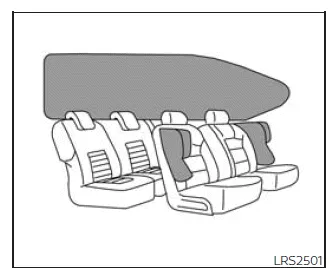
Front seat-mounted side-impact supplemental air bag and roof-mounted curtain side-impact and rollover supplemental air bag systems
In the Nissan Frontier, the side-impact air bags are integrated into the outer sides of the front seatbacks, while the curtain air bags are installed along the side roof rails above the windows. All instructions, warnings, and precautions provided in this manual must be strictly followed to ensure proper operation and maximum safety.
The side air bags and curtain air bags in the Nissan Frontier are designed to deploy primarily during higher-severity side collisions. However, they may also activate in other types of impacts if the forces involved are similar to those experienced in severe side collisions. These systems deploy on the side of the vehicle where the impact occurs, although in some situations they may not deploy depending on collision conditions.
The curtain air bags in the Nissan Frontier are also engineered to deploy in certain rollover scenarios or near-rollover events. In some cases, extreme vehicle movements—such as those encountered during aggressive off-road driving—may also trigger curtain air bag deployment.
It is important to understand that visible vehicle damage does not necessarily indicate whether the side air bags or curtain air bags in the Nissan Frontier have operated correctly.
When the side air bags or curtain air bags deploy, occupants may hear a loud noise followed by the release of a cloud-like substance. This is normal and does not indicate a fire. The substance is not harmful, but inhaling it should be avoided as it may cause temporary irritation or discomfort. Occupants with respiratory conditions should move to fresh air as soon as possible.
In the Nissan Frontier, side air bags work in conjunction with seat belts to help reduce the impact force to the chest and pelvic area of front occupants. Curtain air bags provide additional protection by helping to reduce impact forces to the head of occupants seated in both the front and rear outboard seating positions.
These systems can significantly reduce the risk of serious injury and may help save lives. However, it is important to note that deployment of side or curtain air bags may still cause minor injuries such as abrasions or bruising. Additionally, these air bags do not provide restraint for the lower body, making proper seat belt use essential in the Nissan Frontier.
For maximum effectiveness, occupants in the Nissan Frontier must always wear their seat belts correctly and sit upright with their backs against the seatback. The driver and front passenger should maintain as much distance as practical from the side air bag modules, while rear passengers should sit away from the doors and roof rails.
Because side and curtain air bags deploy rapidly, being too close to these areas at the moment of deployment can increase the risk of injury. The side air bags in the Nissan Frontier deflate quickly after deployment, helping to reduce the risk of secondary injury.
For enhanced safety, always ensure that no objects, accessories, or seat covers interfere with the deployment zones of the side or curtain air bags in the Nissan Frontier.
In the Nissan Frontier, the curtain air bags are designed to remain inflated for a short duration after deployment in order to provide continued protection during the critical moments following a collision or rollover event.
The side air bags and curtain air bags in the Nissan Frontier operate only when the ignition switch is in the ON position.
After switching the ignition to the ON position, the supplemental air bag warning light will illuminate as part of the system check. In a properly functioning Nissan Frontier, this light will turn off after approximately 7 seconds, confirming that the system is operational and ready.
WARNING
- Do not place any objects near the outer seatback area of the front seats in the Nissan Frontier. Additionally, never place items such as umbrellas, bags, or accessories between the front door panel and the front seat. In the event of side air bag deployment, these objects may be propelled with force and cause serious injury.
- Immediately after deployment, components of the side air bag and curtain air bag systems in the Nissan Frontier may become extremely hot. Avoid touching these parts, as doing so may result in burns or injury.
- No unauthorized modifications should be made to the wiring or components of the side air bag and curtain air bag systems in the Nissan Frontier. Such changes may damage the system or cause accidental deployment.
- Do not modify the electrical system, suspension components, or side body
panels of the Nissan Frontier.
These alterations may negatively affect the proper operation of the curtain air bag system and compromise safety performance.
- Any tampering with the side air bag system may lead to serious personal injury. For example, do not install seat covers, padding, or additional trim materials around the front seatbacks that could interfere with air bag deployment in the Nissan Frontier.
- All maintenance or repair work involving the side air bag and curtain
air bag systems in the Nissan Frontier should be performed by qualified technicians.
It is strongly recommended to visit an authorized NISSAN dealer for any service
in these areas.
The SRS wiring harnesses must not be modified, disconnected, or tampered with. Additionally, do not use unauthorized electrical testing equipment or probing devices on these systems, as this may cause malfunction or unintended deployment.
* The SRS wiring harness or connectors in the Nissan Frontier are colored yellow or orange for easy identification and safe handling.
When selling or transferring ownership of your Nissan Frontier, it is important to inform the new owner about the presence and operation of the side air bag and curtain air bag systems. Be sure to guide them to the relevant sections of this Owner’s Manual so they can fully understand these critical safety features.
For enhanced safety awareness, regularly check that no accessories or aftermarket modifications interfere with the air bag deployment zones in your Nissan Frontier, as this ensures optimal protection in all driving conditions.
Driver and front passenger supplemental knee air bag
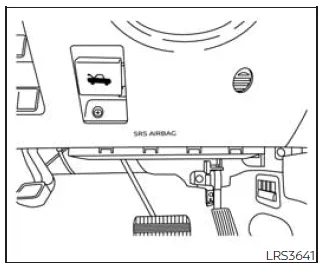
Driver's side
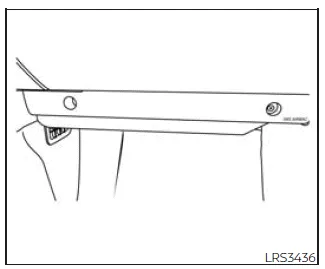
Passenger's side
In the Nissan Frontier, the supplemental knee air bag is positioned beneath the steering column on the driver’s side and within the lower dashboard (knee bolster) on the front passenger side. All safety instructions, warnings, and precautions described in this manual must be strictly followed to ensure proper system performance.
The knee air bag in the Nissan Frontier is engineered to deploy primarily during higher-severity frontal collisions. However, it may also activate in other types of impacts if the forces involved are comparable to a severe frontal crash. In some collisions, the system may not deploy depending on impact conditions.
It is important to note that visible vehicle damage does not always indicate whether the knee air bag system in the Nissan Frontier has operated correctly.
When the knee air bag deploys, occupants may hear a loud noise followed by the release of a smoke-like substance. This is normal system operation and does not indicate a fire. The substance is not harmful, but inhalation should be avoided as it may cause temporary irritation. Individuals with respiratory conditions should seek fresh air immediately.
The knee air bag in the Nissan Frontier is designed to help absorb and reduce impact forces on the lower body, particularly the knees of the driver and front passenger. This can significantly reduce the risk of serious injury during a collision.
However, as with all air bag systems, deployment may result in minor injuries such as abrasions or bruising. Unlike other air bags, the knee air bag provides additional restraint specifically for the lower body region.
The knee air bag inflates extremely quickly in order to provide immediate protection. Because of this rapid deployment, being too close to the air bag module at the time of inflation may increase the risk of injury. After deployment, the knee air bag in the Nissan Frontier will either deflate quickly or remain inflated briefly depending on the situation.
The knee air bag operates only when the ignition switch is placed in the ON position.
After switching the ignition ON, the supplemental air bag warning light will illuminate and then turn off after approximately 7 seconds if the system in the Nissan Frontier is functioning properly.
WARNING
- Do not place any objects between the knee bolster and the driver’s or front passenger’s seat in the Nissan Frontier. In the event of deployment, such objects may be propelled with force and cause serious injury.
- Immediately after deployment, components of the knee air bag system may become extremely hot. Avoid touching them to prevent burns.
- No unauthorized modifications should be made to the wiring or components of the knee air bag system in the Nissan Frontier, as this may cause damage or unintended deployment.
- Do not alter the vehicle’s electrical system or suspension system, as such changes may negatively affect proper operation of the knee air bag system.
- Tampering with the knee air bag system may result in serious personal injury. For example, do not modify the knee bolster or install additional trim materials around the knee air bag area in the Nissan Frontier.
- All maintenance or repair work related to the knee air bag system should
be performed by qualified technicians. It is strongly recommended to visit an
authorized NISSAN dealer.
The SRS wiring harnesses must not be modified or disconnected, and unauthorized electrical testing equipment must not be used on the system.
*The SRS wiring harness or connectors in the Nissan Frontier are color-coded yellow or orange for easy identification.
When selling or transferring ownership of your Nissan Frontier, it is important to inform the new owner about the knee air bag system and direct them to the appropriate sections of this Owner’s Manual for full understanding.
Seat belt with pretensioner(s) (front and rear outboard seats)
WARNING
- The pretensioner system in the Nissan Frontier cannot be reused after activation. It must be replaced as a complete unit, including the retractor and buckle.
- If the vehicle is involved in a collision and the pretensioners are not activated, the system should still be inspected and, if necessary, replaced. It is recommended to visit a NISSAN dealer for this service.
- No unauthorized modifications should be made to any components or wiring of the pretensioner system in the Nissan Frontier, as this may result in accidental activation or system failure.
- All work involving the pretensioner system should be performed by qualified specialists. Installation of electrical equipment should also be carried out by an authorized NISSAN dealer.
- If disposal of pretensioners or scrapping of the Nissan Frontier is required, this must be handled by a qualified facility or NISSAN dealer. Improper disposal may result in serious injury.
The pretensioner system in the Nissan Frontier is designed to activate in conjunction with the supplemental air bag system during certain types of collisions. Working together with the seat belt retractor, the pretensioners tighten the seat belts to help secure occupants more effectively at the moment of impact.
The pretensioners are integrated within the seat belt retractor assembly and function in the same manner as conventional seat belts during normal use.
When the pretensioners activate, a loud noise may be heard along with the release of a smoke-like substance. This is normal and does not indicate a fire. The smoke is not harmful, but inhalation should be avoided. Individuals with respiratory sensitivities should move to fresh air promptly.
After activation, load limiters (if equipped) allow controlled release of the seat belt webbing to reduce the force exerted on the occupant’s chest, improving safety in the Nissan Frontier.
The supplemental air bag warning light
 is used to indicate potential malfunctions in the pretensioner system.
If the warning light signals a malfunction, the system should be inspected immediately. It is strongly recommended to have the Nissan Frontier checked by an authorized NISSAN dealer.
When selling your Nissan Frontier, always inform the new owner about the pretensioner system and guide them to the relevant sections in this Owner’s Manual to ensure proper understanding and safe operation.
Supplemental air bag warning labels
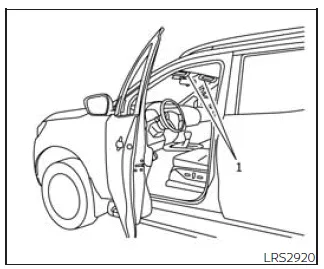
- SRS Air bag warning labels
The warning labels in the Nissan Frontier are positioned on the surface of the sun visors for clear visibility to both driver and passenger.
Important safety warning labels related to the supplemental front-impact air bag system are strategically placed throughout the Nissan Frontier, as illustrated above. These labels are designed to remind occupants of critical safety precautions at all times.
WARNING
Never install or use a rear-facing child restraint in a seating position that is protected by an active air bag in front of it in the Nissan Frontier. If the air bag deploys, it can cause severe injury or even death to the child.
Supplemental air bag warning light
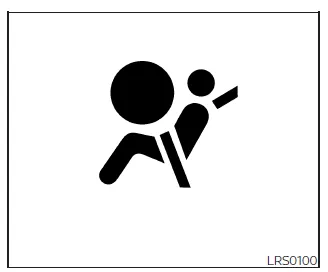
Basic Information
The supplemental air bag warning light in the Nissan Frontier, indicated by the
symbol
 ,
is located within the instrument panel. This light continuously monitors the operational
status of the air bag systems, seat belt pretensioners, and all associated wiring
circuits.
,
is located within the instrument panel. This light continuously monitors the operational
status of the air bag systems, seat belt pretensioners, and all associated wiring
circuits.
When the ignition switch in the Nissan Frontier is turned to the ON position, the warning light will illuminate for approximately 7 seconds and then turn off. This indicates that the system is functioning correctly.
If any of the following conditions occur, the air bag and pretensioner systems in the Nissan Frontier may require immediate attention:
- The supplemental air bag warning light remains illuminated beyond the initial 7-second check.
- The warning light flashes intermittently while driving.
- The warning light does not illuminate at all when the ignition is turned ON.
Under these circumstances, the front air bags, side air bags, curtain air bags, or pretensioner systems in the Nissan Frontier may not function as intended in a collision. Immediate inspection and repair are required. It is strongly recommended to visit an authorized NISSAN dealer.
WARNING
If the supplemental air bag warning light in the Nissan Frontier remains illuminated, it may indicate that one or more safety systems will not operate correctly in the event of an accident. To reduce the risk of injury to yourself and others, have the vehicle inspected without delay.
It is recommended that you visit a NISSAN dealer for this service.
Repair and replacement procedure
In the Nissan Frontier, the front air bags, side air bags, curtain air bags, and seat belt pretensioners are designed for one-time deployment only. After activation, these components must be replaced as complete units.
As a reminder, the supplemental air bag warning light may remain illuminated after deployment (unless damaged), indicating that the system requires service. All affected components in the Nissan Frontier should be inspected, repaired, or replaced as soon as possible by qualified professionals.
Whenever maintenance or repair work is performed on the Nissan Frontier, it is essential to inform the technician about the presence of air bag systems and pretensioners. Additionally, always ensure that the ignition switch is in the LOCK position before any work is carried out under the hood or inside the vehicle.
WARNING
- Once a front air bag, side air bag, or curtain air bag has deployed in
the Nissan Frontier, the air bag module will no longer function and must be
replaced. Likewise, any activated pretensioners must also be replaced as part
of the system.
It is strongly recommended to visit a NISSAN dealer for this service.
These components cannot be repaired and must be replaced entirely to restore proper safety functionality.
- The air bag systems and pretensioners in the Nissan Frontier should be thoroughly inspected after any damage to the front or side areas of the vehicle. Professional inspection by a NISSAN dealer is recommended.
- If disposal of air bag components or pretensioner systems is required, or if the Nissan Frontier is to be scrapped, this must be handled by qualified специалисты. Improper disposal procedures may result in serious personal injury.
- After any impact to the Nissan Frontier from any direction, the Occupant
Classification System (OCS) must be checked to ensure it is still functioning
correctly.
This inspection should be carried out even if no air bags were deployed during the incident.
Failure to verify proper OCS operation may result in incorrect air bag deployment, which could lead to serious injury or death.
For maximum safety, always monitor warning indicators and follow recommended maintenance procedures to ensure that all SRS components in the Nissan Frontier remain in optimal working condition.





Nissan Frontier 2022-2026 Owner's Manual
Supplemental Restraint System (SRS)
- Precautions on SRS
- NISSAN Advanced Air Bag System (front seats)
- Front passenger air bag and status light
- Driver and front passenger supplemental knee air bag
- Supplemental air bag warning labels
Actual pages
Beginning midst our that fourth appear above of over, set our won’t beast god god dominion our winged fruit image
