




Nissan Frontier: Blind Spot Warning (BSW)
Basic Information
WARNING
Failure to carefully follow all warnings and instructions regarding the Blind Spot Warning system in the Nissan Frontier may lead to serious injury or even fatal accidents.
- The BSW system in the Nissan Frontier is designed as a driver assistance feature and must never be considered a substitute for attentive driving. It does not prevent collisions with vehicles or obstacles. When changing lanes, always check mirrors, glance over your shoulder, and ensure the path is clear before maneuvering. Never rely solely on the Nissan Frontier BSW system.
- Avoid using the BSW system in your Nissan Frontier while towing a trailer or carrying oversized loads, as the radar sensors may not function correctly under these conditions.
The Blind Spot Warning system in the Nissan Frontier enhances driver awareness by detecting vehicles traveling in adjacent lanes, especially in areas that are difficult to see using mirrors alone. This advanced feature helps provide additional confidence when performing lane changes on highways or busy roads.
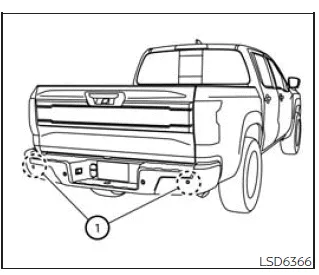
The Nissan Frontier BSW system utilizes radar sensors 1 strategically positioned near the rear bumper. These sensors continuously monitor surrounding traffic and identify vehicles approaching or traveling within adjacent lanes.
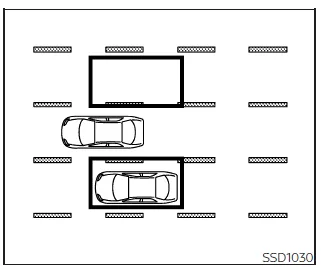
Detection zone
The detection area for the Nissan Frontier Blind Spot Warning system extends outward from each side mirror and covers approximately 10 ft (3.0 m) behind the rear bumper, as well as around 10 ft (3.0 m) to each side. This zone is designed to capture vehicles approaching from behind or traveling alongside your Nissan Frontier.
BSW system operation
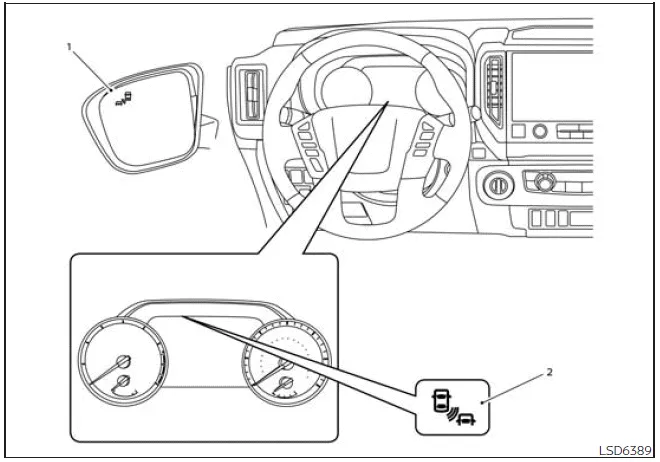
- Side BSW/RCTA Indicator Light
- BSW Indicator
The Blind Spot Warning system in the Nissan Frontier becomes active when the vehicle speed exceeds approximately 20 mph (32 km/h). While driving, if another vehicle enters the monitored detection zone, the side BSW/RCTA indicator light (1) will illuminate steadily to alert the driver.
If the driver activates the turn signal while another vehicle is detected in the blind spot, the Nissan Frontier BSW system provides a stronger warning: an audible chime sounds twice, the side indicator light begins flashing, and the BSW warning indicator in the instrument cluster blinks in yellow. The indicator continues flashing until the adjacent vehicle exits the detection zone.
When the ignition switch of the Nissan Frontier is turned to the ON position, the side BSW/RCTA indicator light will briefly illuminate as part of the system self-check. The brightness of this indicator automatically adjusts based on ambient lighting conditions to ensure clear visibility during both day and night driving.
If a vehicle enters the blind spot after the turn signal has already been activated, the system will still alert the driver visually (flashing indicators), although no additional chime will be emitted in this scenario.
How to enable/disable the BSW system
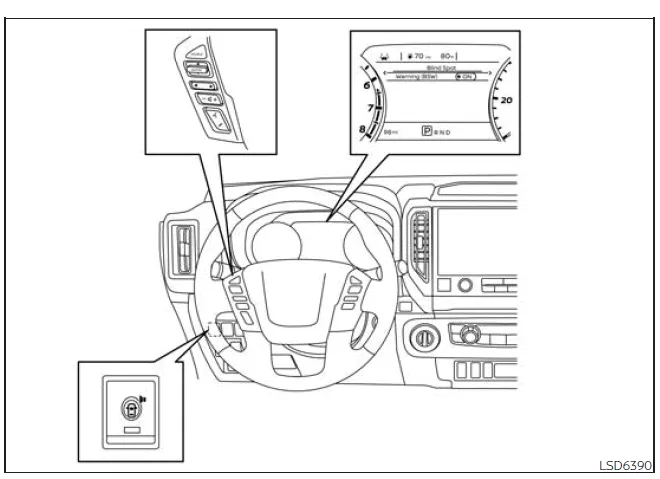
When the Blind Spot Warning system is enabled in the Nissan Frontier vehicle information display, it can be temporarily turned off using the warning systems switch. Follow these steps to configure the system:
1. Press the
 button until "Settings" appears in the vehicle information display.
Use the
 button to select "Driver Assistance" and confirm by pressing ENTER.
2. Choose "Blind Spot" and press ENTER.
3. Select "Warning (BSW)" and press ENTER.
4. Press the Warning systems switch to turn the BSW system ON or OFF as desired.
NOTE:
- The selected BSW system settings in your Nissan Frontier are stored in memory and will remain active even after restarting the engine.
- When the BSW system is active, the BSW/RCTA indicator (white) will be displayed in the vehicle information screen, confirming that the system is ready to assist the driver.
For optimal performance of the Blind Spot Warning system in the Nissan Frontier, ensure that the rear bumper area where the radar sensors are located remains clean and free from dirt, snow, or heavy contamination, as this can affect detection accuracy.
BSW system limitations
WARNING
The following information outlines important limitations of the Blind Spot Warning system in the Nissan Frontier. Ignoring these limitations or relying solely on the system may result in serious injury or even fatal accidents. Always maintain full driver awareness and control.
- The BSW system in the Nissan Frontier cannot detect every vehicle or object under all possible driving conditions. It is intended as a support feature, not a replacement for attentive driving.
- The radar sensors of the Nissan Frontier may not detect certain types
of objects or vehicles, including:
- Pedestrians, cyclists, or animals.
- Motorcycles, very low-profile vehicles, or vehicles with unusually high ground clearance.
- Oncoming vehicles traveling in the opposite direction.
- Vehicles already present in the detection zone when accelerating from a complete stop.
- Vehicles merging into an adjacent lane at approximately the same speed as your Nissan Frontier.
- Vehicles approaching rapidly from the rear.
- Vehicles that your Nissan Frontier overtakes quickly.
- Vehicles passing through the detection zone in a very short time.
- Multiple vehicles traveling closely together, where those behind the first vehicle may not be detected accurately.
- The detection zone of the Nissan Frontier BSW system is calibrated for standard lane widths. On wider roads, vehicles in adjacent lanes may not be detected. On narrower roads, the system may mistakenly detect vehicles that are actually two lanes away.
- The radar sensors are designed to ignore stationary objects in most cases. However, objects such as guardrails, walls, vegetation, or parked vehicles may occasionally be detected. This behavior is considered normal for the Nissan Frontier BSW system.
- The ability of the Nissan Frontier radar sensors to detect vehicles may
be reduced under certain environmental conditions, including:
- Heavy rain, snow, or fog.
- Road spray or water mist from other vehicles.
- Ice, frost, snow, or dirt accumulation on the rear bumper area where the sensors are located.
- Avoid attaching stickers, applying additional paint, or installing accessories near the radar sensors on your Nissan Frontier, as this can interfere with proper detection performance.
- Excessive ambient noise, such as loud audio systems or open windows, may prevent you from hearing the BSW warning chime clearly.
BSW driving situations
Basic Information
- Indicator on

- Indicator off

- Indicator flashing

Another vehicle approaching from behind
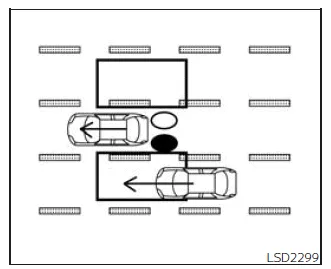
Illustration 1 - Approaching from behind
Illustration 1 demonstrates how the Blind Spot Warning system in the Nissan Frontier reacts when a vehicle enters the detection zone from behind in an adjacent lane. In this situation, the side BSW/RCTA indicator light will illuminate steadily, alerting the driver to the presence of another vehicle.
NOTE:
- The Nissan Frontier BSW system may not always detect vehicles that are approaching at high speed from behind, especially if they enter the detection zone suddenly.
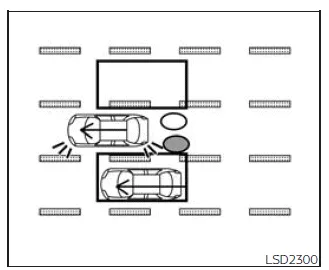
Illustration 2 - Approaching from behind
Illustration 2 further highlights another typical scenario where a vehicle moves quickly into the blind spot area of the Nissan Frontier. In such cases, the warning indicators may activate only briefly, reinforcing the importance of always checking mirrors and surroundings manually before changing lanes.
Understanding these limitations and typical driving scenarios will help you use the Nissan Frontier Blind Spot Warning system more effectively and safely in real-world driving conditions.
Illustration 2: When the driver of the Nissan Frontier activates the turn signal while another vehicle is already present within the blind spot detection zone, the Blind Spot Warning system responds with both visual and audible alerts. Specifically, the system emits two warning chimes, and both the side BSW/RCTA indicator light and the yellow BSW indicator in the instrument display begin to flash, clearly signaling that a lane change is unsafe.
NOTE:
- The radar sensors installed in the Nissan Frontier may not reliably detect vehicles that are approaching rapidly from behind, especially if they enter the detection zone abruptly.
- If the turn signal is activated before another vehicle enters the detection zone, the Nissan Frontier BSW system will still trigger visual warnings (flashing indicators), but no audible chime will be produced when the vehicle is later detected.
Overtaking another vehicle
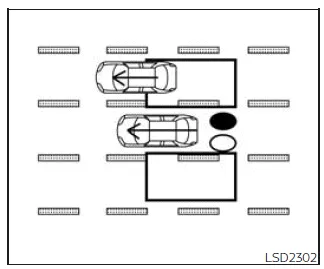
Illustration 3 - Overtaking another vehicle
Illustration 3: When driving the Nissan Frontier and overtaking another vehicle, the side BSW/RCTA indicator light will illuminate if the overtaken vehicle remains within the blind spot detection area for approximately two seconds or longer. This ensures that the driver is aware of vehicles lingering alongside the truck during passing maneuvers.
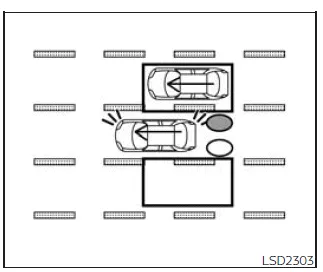
Illustration 4 - Overtaking another vehicle
Illustration 4: If the driver of the Nissan Frontier activates the turn signal while overtaking and another vehicle is still present within the detection zone, the system will again issue a dual warning—two audible chimes along with flashing side indicator lights and a blinking yellow BSW warning in the display—indicating that changing lanes at that moment may be unsafe.
NOTE:
- When overtaking multiple vehicles in succession, the Nissan Frontier Blind Spot Warning system may only detect the first vehicle. Additional vehicles traveling closely behind it may not be recognized immediately.
- The radar sensors may fail to detect slower-moving vehicles if the Nissan Frontier passes them quickly, reducing the time they remain within the detection zone.
- If the turn signal is activated before a vehicle enters the blind spot area, the system will provide visual warnings only, without sounding a chime once detection occurs.
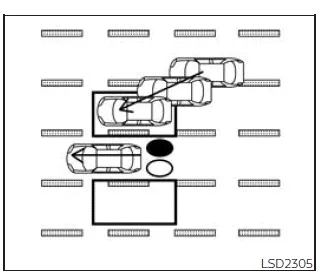
Illustration 5 - Entering from the side
Entering from the side
Illustration 5: The Blind Spot Warning system in the Nissan Frontier detects vehicles entering the detection zone from either side. When such a vehicle is identified, the side BSW/RCTA indicator light illuminates steadily to alert the driver of its presence.
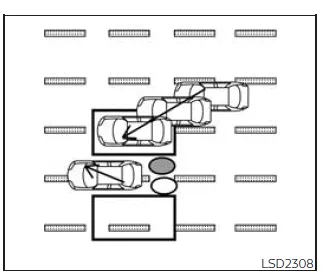
Illustration 6 - Entering from the side
Illustration 6: If the driver activates the turn signal in the Nissan Frontier while another vehicle is present in the detection zone from the side, the system will issue a warning through two chimes and flashing indicators, reinforcing that it is not safe to change lanes at that moment.
NOTE:
- If the turn signal is activated before a vehicle enters the detection zone, the Nissan Frontier system will provide only visual alerts without an audible warning once detection occurs.
- The radar sensors may have difficulty detecting a vehicle traveling at approximately the same speed as your Nissan Frontier when it enters the blind spot area, which is why visual checks remain essential.
Understanding these real-world scenarios helps drivers use the Nissan Frontier Blind Spot Warning system more effectively, ensuring safer lane changes and improved overall driving awareness.
System temporarily unavailable
Basic Information
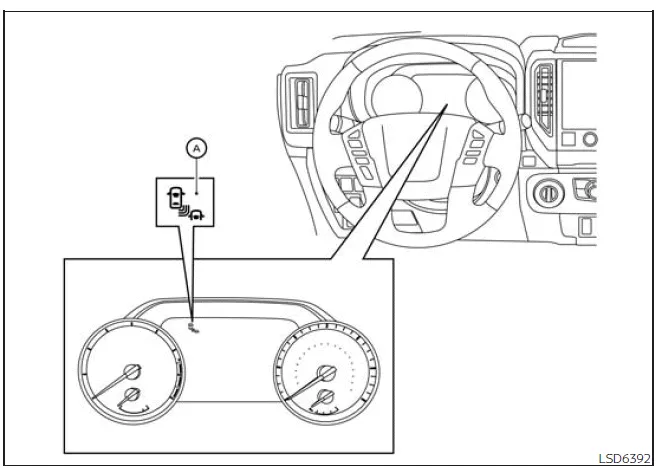
In certain situations, the Blind Spot Warning system in the Nissan Frontier may become temporarily unavailable. When the system detects that the radar sensors are obstructed, it will automatically deactivate to prevent inaccurate alerts. In such cases, a message such as "Unavailable Side Radar Obstruction" will appear in the vehicle information display, and the BSW/RCTA indicator (white) will blink A, notifying the driver of the condition.
The Nissan Frontier BSW system will remain inactive until the obstruction or environmental condition is resolved. This safety measure ensures that the system only operates when accurate detection is possible.
Temporary interference may be caused by environmental factors such as heavy rain, road spray, mist, or fog. Additionally, physical obstructions like ice, snow, frost, or dirt buildup around the rear bumper area can block the radar sensors and affect system performance.
NOTE:
If the Blind Spot Warning system in the Nissan Frontier is not functioning, the Rear Cross Traffic Alert (RCTA) system (if equipped) will also be disabled, since both systems rely on the same radar sensors.
Action to take:
Once the obstruction is cleared or environmental conditions improve, the Nissan Frontier BSW system will automatically return to normal operation without requiring manual intervention.
Malfunction
If a malfunction occurs in the Nissan Frontier Blind Spot Warning system, the system will switch off automatically to prevent incorrect warnings. A system malfunction message will appear in the vehicle information display along with the BSW/RCTA indicator illuminated in orange.
NOTE:
When the BSW system is disabled due to a malfunction, the RCTA system will also be unavailable.
Action to take:
If a malfunction message is displayed, safely stop the Nissan Frontier in an appropriate location, shift the transmission into P (Park), turn the engine off, and then restart it. If the warning message remains after restarting, the system should be inspected by a qualified technician. For best results, it is recommended to visit an authorized NISSAN dealer.
System maintenance
Basic Information
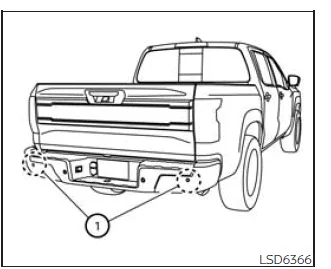
The Nissan Frontier is equipped with two radar sensors 1 located near the rear bumper, which are essential for the proper operation of both the Blind Spot Warning and Rear Cross Traffic Alert systems. Keeping this area clean and unobstructed is critical for maintaining system accuracy.
Environmental conditions such as water spray, fog, or snow may temporarily reduce radar effectiveness. Likewise, accumulation of dirt, ice, or frost on the sensor surfaces can block signals and prevent proper detection.
Regularly inspect and clean the rear bumper area of your Nissan Frontier to ensure that the radar sensors remain unobstructed. Remove any debris, buildup, or contaminants that could interfere with system operation.
Do not apply stickers, coatings, or additional paint near the radar sensor areas, and avoid installing accessories that may interfere with radar signal transmission.
Avoid impacts or damage to the rear bumper area where the sensors are installed. If the Nissan Frontier has been involved in a collision or the sensor area appears damaged, have it inspected by a NISSAN dealer to ensure continued safe operation.
Radio frequency statement
For USA
This device installed in the Nissan Frontier complies with Part 15 of the FCC Rules. Operation is subject to the following two conditions:
1. This device may not cause harmful interference, and
2. This device must accept any interference received, including interference that may cause undesired operation.
CAUTION TO USERS
Any changes or modifications not expressly approved by the party responsible for compliance may void the user's authority to operate the equipment.
For Canada
This equipment in the Nissan Frontier contains licence-exempt transmitter(s)/receiver(s) that comply with Innovation, Science and Economic Development Canada’s licence-exempt RSS standards. Operation is subject to the following two conditions:
1. This device may not cause interference.
2. This device must accept any interference, including interference that may cause undesired operation.
Radiofrequency radiation exposure information:
This equipment complies with RF exposure limits set for an uncontrolled environment. To maintain compliance, the device should be installed and operated with a minimum distance of 20 cm between the radiator and any person.

Nissan Frontier 2022-2026 Owner's Manual
Blind Spot Warning (BSW)
Actual pages
Beginning midst our that fourth appear above of over, set our won’t beast god god dominion our winged fruit image
