




Nissan Frontier: Towing a trailer
Basic information
WARNING
- Improperly loaded trailers or excessive trailer weight can significantly affect the handling, braking, and stability of your Nissan Frontier, potentially resulting in serious accidents.
- Never tow a trailer when the TEMPORARY FULL SIZE spare tire is installed on your Nissan Frontier.
- If you own a Nissan Frontier Crew Cab SV Long Wheelbase model, do not
remove or replace the factory-installed trailer hitch. Doing so:
- May create a risk of overheating or structural failure in the event of a collision.
- Can cause the vehicle to fall out of compliance with applicable safety regulations.
CAUTION
- Avoid towing a trailer or carrying heavy loads with your Nissan Frontier during the first 500 miles (805 km). This break-in period is essential to prevent premature wear or damage to engine and drivetrain components.
- During the initial 500 miles (805 km) of towing, do not exceed 50 mph (80 km/h) and avoid aggressive acceleration. Gradual operation allows the Nissan Frontier to adapt to increased load conditions safely.
Your Nissan Frontier is primarily designed for transporting passengers and cargo. When towing a trailer, additional stress is placed on critical systems such as the engine, transmission, suspension, steering, and braking components.
To ensure safe towing practices, always use properly rated towing equipment and follow manufacturer recommendations specific to the Nissan Frontier.
A detailed NISSAN Towing Guide (U.S. only) is available online at www.nissanusa.com. This guide provides comprehensive information about towing capacity, required equipment, and best practices for safe trailer operation.
Following these guidelines will help maintain the reliability, safety, and performance of your Nissan Frontier even under demanding towing conditions.
Maximum load limits
Maximum trailer loads
When towing with your Nissan Frontier, it is essential that the total trailer load never exceeds the limits specified in the "Towing Load/Specification" chart provided for this vehicle.
The total trailer load is defined as the combined weight of the trailer itself plus any cargo carried within it. Proper calculation of this value is critical for maintaining safe towing performance with your Nissan Frontier.
- When towing a trailer weighing 3,500 lbs. (1,587 kg) or more, your Nissan Frontier must be equipped with a trailer braking system to ensure safe stopping capability.
The maximum Gross Combined Weight Rating (GCWR) for your Nissan Frontier must also remain within the specified limits outlined in the towing specifications.
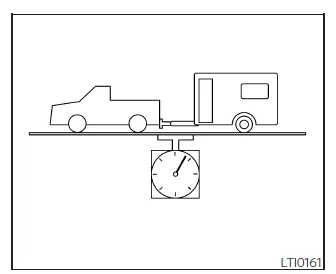
The GCWR represents the total combined weight of your Nissan Frontier (including passengers, cargo, and accessories) plus the full trailer load. Exceeding this rating or using incorrect towing equipment can significantly reduce vehicle control, braking efficiency, and overall performance.
Keep in mind that towing capability in a Nissan Frontier depends not only on weight limits but also on real-world driving conditions. Factors such as terrain, road surface, and driving environment can all influence safe towing capacity.
For example, while your Nissan Frontier may handle maximum loads on flat highways, reduced traction environments—such as wet boat ramps or loose gravel—may require significantly lighter loads for safe operation.
Ambient temperature is another critical factor. Towing heavy loads in high heat or on steep inclines can strain the engine and cooling system. In such situations, the Nissan Frontier may activate engine protection mode, reducing power output to prevent overheating. As a result, vehicle speed may decrease under load.
Careful trip planning is strongly recommended. Always consider load weight, environmental conditions, and route characteristics when towing with your Nissan Frontier.
WARNING
Engine overheating can lead to reduced engine output and lower driving speeds. This may place your Nissan Frontier below the flow of surrounding traffic, increasing the risk of a collision. If safe speeds cannot be maintained, pull over in a secure location, allow the engine to cool, and resume driving only when normal operation is restored.
CAUTION
Damage caused by improper towing practices or exceeding load limits is not covered under the Nissan Frontier warranty.
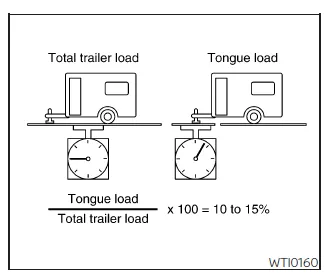
Tongue load
When using either a weight-carrying or weight-distributing hitch on your Nissan Frontier, maintain the trailer tongue load within 10–15% of the total trailer weight, unless otherwise specified by the trailer manufacturer.
It is important that the tongue load also remains within the maximum limits indicated in the towing specifications for your Nissan Frontier. If the tongue load becomes too high or too low, redistribute the cargo within the trailer to restore proper balance.
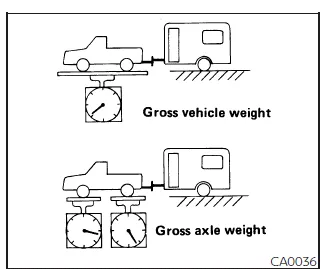
Maximum Gross Vehicle Weight (GVW)/maximum Gross Axle Weight (GAW)
The Gross Vehicle Weight (GVW) of your Nissan Frontier must never exceed the Gross Vehicle Weight Rating (GVWR) listed on the F.M.V.S.S./C.M.V.S.S. certification label.
GVW includes the total weight of the unloaded Nissan Frontier plus passengers, cargo, hitch equipment, trailer tongue load, and any additional accessories installed on the vehicle.
In addition, the load on each axle must remain within the Gross Axle Weight Rating (GAWR) limits. Both front and rear axle loads should be carefully monitored to prevent uneven weight distribution and mechanical stress.
It is also important to understand that towing capacity ratings for the Nissan Frontier are calculated using a base vehicle configuration. Adding passengers, cargo, or optional equipment reduces the available towing capacity and allowable tongue weight.
For optimal safety and performance, always account for these additional loads and ensure your Nissan Frontier remains within all specified weight limits before towing.
To ensure safe towing with your Nissan Frontier, both the vehicle and trailer must be weighed and verified against all critical limits, including GVWR, Front GAWR, Rear GAWR, Gross Combined Weight Rating (GCWR), and maximum towing capacity.
Accurate weight measurements for your Nissan Frontier setup can be obtained using platform-style scales commonly available at truck stops, highway weigh stations, construction supply centers, or recycling facilities.
To calculate the remaining payload capacity available for trailer tongue weight on your Nissan Frontier, follow this step-by-step method:
1. Locate the GVWR value displayed on the F.M.V.S.S./C.M.V.S.S. certification label of your Nissan Frontier.
2. Weigh your Nissan Frontier on a scale with all passengers, cargo, and equipment typically present during towing.
3. Subtract the measured vehicle weight from the GVWR. The result represents the maximum allowable tongue load for your Nissan Frontier.
To determine the available towing capacity for your Nissan Frontier, use the following procedure:
1. Identify the GCWR value from the "Towing Load/Specification" chart provided for your Nissan Frontier.
2. Subtract the actual loaded vehicle weight from the GCWR. The remaining value is the maximum trailer weight your Nissan Frontier can safely tow under current conditions.
To calculate the Gross Trailer Weight, weigh the fully loaded trailer, including all cargo and installed equipment, as it would be used during normal towing. Confirm that this value does not exceed the trailer’s rated capacity or the calculated towing capacity of your Nissan Frontier.
Additionally, measure the load on both the front and rear axles of your Nissan Frontier. Ensure that neither axle exceeds its respective Gross Axle Weight Rating (GAWR) as listed on the certification label. If limits are exceeded, redistribute or reduce the load accordingly to maintain safe operation.
Example:
- Measured Gross Vehicle Weight (GVW) of Nissan Frontier including passengers, cargo, and hitch: 5,185 lbs. (2,352 kg).
- Gross Vehicle Weight Rating (GVWR) from certification label: 5,815 lbs. (2,638 kg).
- Gross Combined Weight Rating (GCWR) from specification chart: 11,133 lbs. (5,050 kg).
- Maximum trailer towing capacity from specification chart: 6,100 lbs. (2,767 kg).
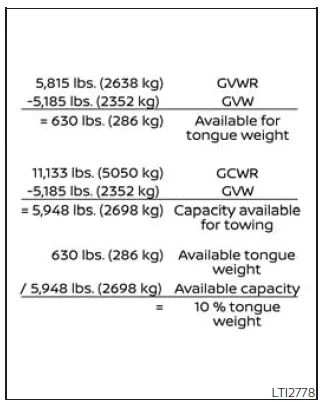
The actual towing capacity of your Nissan Frontier may be lower than the maximum specified value due to the weight of passengers, cargo, and optional equipment inside the vehicle.
Always maintain the trailer tongue weight within 10–15% of the total trailer weight or within the limits recommended by the trailer manufacturer for your Nissan Frontier setup.
If the tongue load becomes too high, redistribute cargo within the trailer to achieve proper balance. Never exceed the maximum tongue weight specified in the towing chart, even if calculations suggest a higher allowable value. Conversely, if the tongue load falls below 10%, reduce the overall trailer weight to maintain stability.
As a best practice, always double-check that all calculated and measured values for your Nissan Frontier remain within the specified limits before driving. Proper weight distribution is essential for safe handling, braking performance, and long-term durability of your vehicle.
Towing load/specification
WARNING
The towing capacities listed for your Nissan Frontier are intended as general guidelines only and must not be considered absolute limits under all conditions.
The actual towing capability of your Nissan Frontier is influenced by multiple factors, including factory-installed options, dealer-installed equipment, passenger count, and cargo weight. To determine the real towing capacity, it is essential to weigh both the Nissan Frontier and the trailer as described in this manual. Never exceed the stated maximum towing capacity, GCWR, or GVWR listed on the F.M.V.S.S./C.M.V.S.S. certification label, as doing so can compromise safety and may result in serious injury or significant vehicle damage.
King Cab models:
2WD
- Maximum Payload
- Metric Measure: 735 kg
- US Measure: 1,620 lbs.
- Maximum Towing Capacity*1, *2, *3
- Metric Measure: 3,243 kg
- US Measure: 7,150 lbs.
- Maximum Tongue Load*2, *3
- Metric Measure: 324.3 kg
- US Measure: 715 lbs.
- Maximum Gross Combined Weight Rating
- Metric Measure: 5,425 kg
- US Measure: 11,960 lbs.
4WD
- Maximum Payload
- Metric Measure: 658 kg
- US Measure: 1,450 lbs.
- Maximum Towing Capacity*1, *2, *3
- Metric Measure: 3,175 kg
- US Measure: 7,000 lbs.
- Maximum Tongue Load*2, *3
- Metric Measure: 317.5 kg
- US Measure: 700 lbs.
- Maximum Gross Combined Weight Rating
- Metric Measure: 5,425 kg
- US Measure: 11,960 lbs.
Crew Cab - Short wheel base models:
2WD
- Maximum Payload
- Metric Measure: 676 kg
- US Measure: 1,490 lbs.
- Maximum Towing Capacity*1, *2, *3
- Metric Measure: 3,207 kg
- US Measure: 7,071 lbs.
- Maximum Tongue Load*2, *3
- Metric Measure: 320.7 kg
- US Measure: 707 lbs.
- Maximum Gross Combined Weight Rating
- Metric Measure: 5,425 kg
- US Measure: 11,960 lbs.
4WD
- Maximum Payload
- Metric Measure: 603 kg
- US Measure: 1,330 lbs.
- Maximum Towing Capacity*1, *2, *3
- Metric Measure: 3,157 kg
- US Measure: 6,960 lbs.
- Maximum Tongue Load*2, *3
- Metric Measure: 315.7 kg
- US Measure: 696 lbs.
- Maximum Gross Combined Weight Rating
- Metric Measure: 5,425 kg
- US Measure: 11,960 lbs.
Crew Cab - Long wheel base models: 2WD
- Maximum Payload
- Metric Measure: 635 kg
- US Measure: 1,400 lbs.
- Maximum Towing Capacity*1, *2, *3
- Metric Measure: 3,139 kg
- US Measure: 6,920 lbs.
- Maximum Tongue Load*2, *3
- Metric Measure: 313.9 kg
- US Measure: 692 lbs.
- Maximum Gross Combined Weight Rating
- Metric Measure: 5,425 kg
- US Measure: 11,960 lbs.
4WD
- Maximum Payload
- Metric Measure: 544 kg
- US Measure: 1,200 lbs.
- Maximum Towing Capacity*1, *2, *3
- Metric Measure: 3,066 kg
- US Measure: 6,760 lbs.
- Maximum Tongue Load*2, *3
- Metric Measure: 306.6 kg
- US Measure: 676 lbs.
- Maximum Gross Combined Weight Rating
- Metric Measure: 5,425 kg
- US Measure: 11,960 lbs.
*1:
- The towing capacity of the Nissan Frontier is calculated using the SAE J2807 standard. Keep in mind that additional passengers, cargo, or optional accessories will reduce the available towing capacity.
- When towing more than 3,500 lbs. (1,587 kg), your Nissan Frontier must be equipped with a trailer braking system to ensure safe braking performance.
- NISSAN strongly recommends using a tandem-axle trailer when towing loads exceeding 3,000 lbs. (1,361 kg) for improved stability and control.
*2: When using the Genuine NISSAN step bumper as a ball mount on your Nissan Frontier, the towing capacity is limited to 3,500 lbs. (1,588 kg) with a maximum tongue load of 350 lbs. (158 kg).
*3: For towing loads exceeding 5,000 lbs. (2,268 kg), the use of a weight-distributing hitch system is highly recommended to maintain proper balance and handling of your Nissan Frontier.
For optimal safety and performance, always match your towing setup to the specific configuration of your Nissan Frontier and verify all weight limits before driving.
Towing safety
Basic information
WARNING
If your Nissan Frontier is a Crew Cab SV Long Wheelbase model, the factory-installed trailer hitch must never be removed or replaced under any circumstances.
- Altering or removing the original hitch can create a significant risk of a thermal event, potentially leading to severe injury or even fatal consequences in the event of a collision.
- Such modifications may also render your Nissan Frontier non-compliant with Federal Motor Vehicle Safety Standards, affecting both safety and legal requirements.
Trailer hitch
For other Nissan Frontier configurations, the vehicle may be equipped with an optional trailer towing package. This package typically includes a heavy-duty, receiver-type frame-mounted hitch engineered to support the full towing capability of the Nissan Frontier when used with appropriate towing equipment.
Always select a ball mount and hitch ball that meet or exceed the required towing ratings for your specific trailer. Genuine NISSAN towing components are strongly recommended, as they are specifically designed to match the performance and safety standards of your Nissan Frontier.
If your Nissan Frontier is not equipped with a factory towing package, it is critical to verify the towing limits of the installed bumper hitch or aftermarket receiver. Using an improperly rated hitch can compromise safety and performance.
Ensure that the trailer hitch is securely fastened to the vehicle structure. A properly installed hitch helps minimize trailer sway and improves stability, especially in challenging conditions such as crosswinds, uneven road surfaces, or when being passed by large vehicles.
WARNING
Every component of the towing system has its own specific weight rating, and these limits must never be exceeded.
Even if your Nissan Frontier is capable of towing a higher load, exceeding the rating of the hitch components can result in serious injury, equipment failure, or property damage.
Hitch ball
Selecting the correct hitch ball is essential for safe towing with your Nissan Frontier:
- The required hitch ball size is typically stamped on the trailer coupler and may also be marked on the top of the hitch ball itself.
- Always choose a hitch ball that matches the trailer weight class and complies with your Nissan Frontier towing specifications.
- The diameter of the hitch ball shank must correspond precisely to the hole in the ball mount. It should not be more than 1/16 inch smaller than the mount opening.
- The threaded portion of the hitch ball must be long enough to ensure proper installation, with at least two threads visible beyond the lock washer and securing nut.
Ball mount
The hitch ball is mounted onto the ball mount, which is then inserted into the receiver hitch on your Nissan Frontier. Selecting the correct class of ball mount is essential based on trailer weight. Additionally, the mount should position the trailer so that it remains level with the ground, ensuring balanced load distribution and improved towing stability.
Nissan Frontier towing setup illustration for safe hitch and trailer alignment
Bumper towing
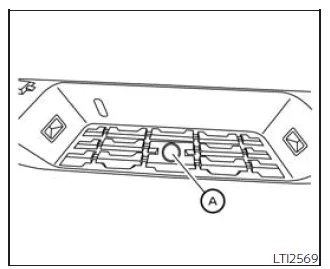
The Genuine NISSAN step bumper installed on the Nissan Frontier is designed with provisions for mounting a trailer hitch ball. It supports towing loads up to 3,500 lbs. (1,588 kg), making it suitable for lighter trailers.
To install a hitch ball on the step bumper, carefully remove the designated center cutout section and securely mount the hitch ball according to the manufacturer's instructions. Proper installation ensures safe and reliable towing performance.
Weight carrying hitches
A weight-carrying hitch, also referred to as a "dead weight" hitch, is engineered to support the full trailer tongue weight and gross trailer load directly on the hitch assembly. This type of setup is commonly used for lighter towing applications with the Nissan Frontier, where additional weight distribution systems are not required.
For enhanced safety and long-term durability, always verify that all towing components used with your Nissan Frontier are correctly rated, properly installed, and regularly inspected before each trip.
Weight distribution hitch
This towing setup, commonly referred to as a "load-leveling" or "equalizing" hitch, is designed to enhance stability when towing with your Nissan Frontier. It uses spring bars connected between the hitch assembly and the trailer frame to evenly distribute the trailer tongue weight across the vehicle’s chassis.
In many situations, a vehicle like the Nissan Frontier may not be able to safely support the entire tongue weight directly at the rear axle. By redistributing part of that load toward the front axle, a weight distribution hitch improves steering response, braking performance, and overall driving balance. This is especially important when towing heavier trailers or driving at highway speeds.
For Nissan Frontier models, a Class IV weight-distributing hitch system is strongly recommended when towing trailers exceeding 5,000 lbs. (2,268 kg). Always consult both the trailer manufacturer and towing equipment supplier to confirm compatibility and correct usage.
NOTE:
Using a weight-distributing hitch system may influence the performance of trailers equipped with surge brakes. If your trailer uses such a braking system, verify compatibility with the hitch, trailer, and brake manufacturers before installation to avoid improper braking behavior.
Carefully follow the manufacturer’s instructions when installing and adjusting the weight distribution hitch system on your Nissan Frontier. Proper setup is critical for safe towing performance.
General setup guidelines include:
1. Park your unloaded Nissan Frontier on a flat, level surface.
With the ignition switched ON and all doors closed, allow the vehicle to settle for several minutes to achieve its natural ride height.
2. Measure the height of fixed reference points at the center of both the front and rear bumpers.
3. Attach the trailer and adjust the equalizer bars so that the front bumper height remains within 0 to 0.5 inches (0 to 13 mm) of the original measurement taken earlier. The rear bumper should not exceed its initial reference height.
WARNING
The weight-distributing hitch must be correctly adjusted so that the rear bumper does not rise above the original unloaded reference height when the trailer is attached.
Failure to properly adjust the system on your Nissan Frontier can result in unstable handling characteristics, reduced control, and an increased risk of accidents, potentially leading to serious injury or property damage.
Sway control device
External factors such as sudden steering inputs, strong crosswinds, or turbulence from passing vehicles can cause trailer sway. To minimize these effects, sway control devices can be installed on your Nissan Frontier towing setup.
If you choose to use such a device, consult a qualified towing equipment specialist to ensure compatibility with your Nissan Frontier, hitch configuration, trailer design, and braking system. Proper installation and adjustment are essential for optimal performance.
Always follow the manufacturer’s recommendations when installing and operating sway control systems.
Class I hitch
Class I towing equipment, including the receiver, ball mount, and hitch ball, is suitable for light-duty towing with a maximum trailer weight of up to 2,000 lbs. (907 kg). This option may be used for smaller trailers when operating your Nissan Frontier under minimal load conditions.
Class II hitch
Class II towing systems can handle trailers up to 3,500 lbs. (1,587 kg). The Genuine NISSAN step bumper installed on many Nissan Frontier models is classified within this category and is suitable for moderate towing needs.
Class III hitch
Class III hitch equipment is designed for heavier towing applications, supporting trailer weights up to 5,000 lbs. (2,268 kg). This configuration is commonly used with mid-sized trailers and provides enhanced durability for your Nissan Frontier.
Class IV hitch
For maximum towing capability, Class IV hitch systems are rated for trailers up to 10,000 lbs. (4,535 kg). When towing loads exceeding 5,000 lbs., the use of a weight-distributing hitch system is highly recommended to maintain proper load balance, vehicle control, and safety when operating your Nissan Frontier.
For optimal towing safety and performance, always ensure that all components used with your Nissan Frontier are correctly matched, professionally installed, and regularly inspected before each journey.
Your Nissan Frontier may be equipped with a Class IV trailer hitch system that is rated for up to 10,000 lbs. (4,535 kg). However, it is important to understand that the actual towing capability of your Nissan Frontier is limited to the maximum trailer weight specified in the official "Towing Load/Specification" chart for your specific model and configuration.
Even if the hitch hardware itself has a higher rating, exceeding the vehicle’s approved towing limits can negatively affect performance, safety, and durability. Always follow the Nissan Frontier towing specifications to ensure optimal operation and long-term reliability.
CAUTION
- For towing loads above 2,000 lbs. (907 kg), specially designed hitches with reinforced frame mounting points are required. Genuine NISSAN towing components for the Nissan Frontier are available through authorized dealers and are engineered for proper fit and performance.
- The trailer hitch must not interfere with or be attached to the impact-absorbing bumper system, as this could compromise safety and structural integrity.
WARNING
- Never use axle-mounted hitches on your Nissan Frontier, as they can cause serious handling issues and potential structural damage.
- Avoid modifying essential vehicle systems such as the exhaust or braking system to install towing equipment. Such alterations can reduce safety and void warranties.
- To minimize injury risk and prevent additional damage in the event of a rear collision, remove the ball mount from the receiver when it is not in use.
- Inspect all trailer hitch mounting bolts regularly to ensure they remain securely tightened and free from corrosion or wear.
Tire pressures
- When towing with your Nissan Frontier, always inflate the vehicle’s tires to the recommended cold tire pressure listed on the Tire and Loading Information label for safe and stable operation.
- Ensure that trailer tires are in proper condition and meet the manufacturer’s specifications for size, load rating, and inflation pressure to maintain safe towing performance.
Safety chains
Always connect appropriate safety chains between your Nissan Frontier and the trailer. These chains should be crossed underneath the trailer tongue and securely attached to the hitch assembly rather than the bumper or axle.
If the hitch ball is mounted on the bumper, the chains may be attached to the bumper structure. Leave enough slack in the chains to allow for smooth turning, but not so much that they drag on the ground.
Trailer lights
CAUTION
When connecting trailer lighting to the Nissan Frontier electrical system, always use a commercially available powered module or converter.
This module draws power directly from the vehicle battery while using the existing tail, brake, and turn signal circuits as control signals. The converter must not draw more than 15 milliamps from the vehicle’s lighting circuits. Using an incorrect or overloaded module can damage the Nissan Frontier electrical system.
Consult a qualified trailer equipment specialist to obtain and install the proper wiring components for your Nissan Frontier.
Trailer lighting must comply with all applicable local and federal regulations. For proper installation and connection, it is recommended to visit a NISSAN dealer or a professional trailer service provider.
Nissan Frontier models equipped with the factory towing package include a 7-pin trailer connector. For vehicles without this package, a flat 4-pin connector is available. If your trailer uses a different connector type, an appropriate adapter will be required and can be purchased from automotive or towing supply retailers.
Trailer brakes
If your trailer is equipped with its own braking system, ensure it meets all relevant regulations and is correctly installed and maintained for safe operation.
Nissan Frontier vehicles fitted with a 7-pin connector are pre-wired to support a trailer brake controller. For proper installation, it is recommended to use a compatible adapter harness available through a NISSAN dealer.
For maximum safety, always verify that all towing components on your Nissan Frontier—including brakes, lights, wiring, and hitch hardware—are properly installed, fully functional, and compliant with all applicable standards before each trip.
WARNING
Under no circumstances should a trailer braking system be connected directly to the brake system of your Nissan Frontier.
When towing with your Nissan Frontier, any trailer with a total weight of 3,500 lbs. (1,587 kg) or more must be equipped with its own independent braking system. In many regions, local regulations require trailer brakes at even lower weight thresholds. Always verify and comply with all applicable laws in the areas where you intend to operate your Nissan Frontier.
There are several types of trailer braking systems available, each designed for specific towing requirements and trailer configurations.
Surge Brakes – In this system, the brake actuator is mounted on the trailer tongue and connected hydraulically to each trailer wheel. When the Nissan Frontier slows down, the trailer’s forward momentum compresses the actuator, automatically applying the trailer brakes.
Hydraulic surge brakes are commonly found on rental trailers and marine trailers. These systems operate independently and do not require any electrical or hydraulic connection between the trailer and the Nissan Frontier for brake activation.
Electric Trailer Brakes – These systems are controlled electronically via a brake controller installed in the Nissan Frontier. The controller sends a signal to activate the trailer brakes proportionally based on braking force.
If your trailer is equipped with electric brakes, refer to the section on installing and using an electric trailer brake controller to ensure proper setup and safe operation.
For maximum safety, always have a qualified towing equipment specialist verify that the trailer braking system is properly installed, adjusted, and functioning correctly before towing with your Nissan Frontier.
Electric trailer brake controller
Trailers fitted with electric braking systems often require an aftermarket brake controller to be installed in the Nissan Frontier. This device ensures smooth and proportional braking performance between the vehicle and the trailer.
A Genuine NISSAN jumper harness is available and specifically engineered for seamless integration when installing an aftermarket brake controller in your Nissan Frontier.
Always follow the brake controller manufacturer’s instructions carefully during installation to guarantee safe and reliable operation.
Pre-towing tips
- Ensure your Nissan Frontier remains level when a trailer is attached, whether loaded or unloaded. An abnormal nose-up or nose-down position may indicate improper tongue weight, excessive load, or suspension issues that must be corrected before driving.
- Secure all cargo inside the trailer to prevent shifting during transit, which can affect stability and handling.
- Position the cargo as low as possible within the trailer to maintain a low center of gravity and improve control.
- Distribute the load properly: approximately 60% of the total weight should be placed toward the front half of the trailer and 40% toward the rear, while maintaining side-to-side balance.
- Each time you connect a trailer to your Nissan Frontier, inspect the hitch connection, verify tire pressures (both vehicle and trailer), check trailer lighting functionality, and ensure all lug nuts are properly tightened.
- Confirm that your rearview mirrors meet all legal visibility requirements. If necessary, install extended towing mirrors before driving your Nissan Frontier.
- Measure the total height of your Nissan Frontier and trailer combination to avoid clearance issues when passing under structures such as bridges or parking entrances.
Trailer towing tips
To become familiar with how your Nissan Frontier behaves while towing, practice driving maneuvers such as turning, braking, and reversing in a safe, open area free from traffic. Towing significantly changes vehicle dynamics, including steering response and braking distance.
- Always secure cargo within the trailer to prevent load movement while driving.
- Lock the trailer coupler securely using a safety pin or lock to prevent accidental detachment.
- Avoid sudden acceleration, harsh braking, or abrupt starts to maintain control of your Nissan Frontier and trailer.
- Minimize sharp turns and rapid lane changes, as these can destabilize the trailer.
- Maintain a moderate and consistent driving speed for improved safety and fuel efficiency.
- When reversing, place one hand at the bottom of the steering wheel and move it in the direction you want the trailer to go. Make small, controlled adjustments and reverse slowly.
- If possible, have a second person assist by guiding you when backing up your Nissan Frontier with a trailer attached.
Proper preparation and careful driving techniques will help ensure safe and efficient towing performance with your Nissan Frontier in all driving conditions.
When parking your Nissan Frontier with a trailer attached, always secure both the vehicle and trailer wheels using wheel chocks. Parking on an incline should be avoided whenever possible; however, if it cannot be avoided, follow the proper procedure below to ensure safety and prevent damage.
CAUTION
Do not shift the transmission of your Nissan Frontier into the P (Park) position before securing the wheels and applying the parking brake, as this may result in transmission damage.
1. Firmly press and hold the brake pedal.
2. Have an assistant place wheel blocks securely on the downhill side of both the Nissan Frontier and the trailer tires.
3. Slowly release the brake pedal until the vehicle weight is fully supported by the wheel blocks.
4. Apply the parking brake securely.
5. Shift the transmission of your Nissan Frontier into the P (Park) position.
6. Confirm that the 4WD system (if equipped) is properly engaged in 2WD, 4H, or 4LO, and ensure that the ATP warning light is OFF. If any indicator is flashing or illuminated, return the transmission to P (Park) and adjust the 4WD selector accordingly.
7. Turn off the engine.
To resume driving:
1. Start your Nissan Frontier engine.
2. Press and hold the brake pedal.
3. Shift the transmission into the desired gear.
4. Release the parking brake.
5. Move forward slowly until both the Nissan Frontier and trailer are clear of the wheel blocks.
6. Apply the brake pedal again.
7. Have an assistant remove and store the wheel blocks safely.
- When descending hills with a trailer, the additional weight pushing against your Nissan Frontier can reduce stability. To maintain control, reduce speed and shift to a lower gear instead of relying solely on the brakes.
- If the engine coolant temperature increases significantly, refer to the overheating instructions for your Nissan Frontier to prevent engine damage.
- Towing with your Nissan Frontier will increase fuel consumption compared to normal driving conditions.
- Avoid towing any trailer during the first 500 miles (805 km) of vehicle operation to allow proper engine and drivetrain break-in.
- For the first 500 miles (805 km) of towing, do not exceed 50 mph (80 km/h) to reduce stress on vehicle components.
- Service your Nissan Frontier more frequently when towing, following the recommendations outlined in the maintenance schedule section of this manual.
- When turning, remember that the trailer wheels track closer to the inside of the turn than the vehicle wheels. Take wider turns to prevent the trailer from contacting curbs or obstacles.
- Be aware that crosswinds and uneven road surfaces can negatively affect the handling of your Nissan Frontier and trailer combination. Passing large vehicles may also create wind turbulence, requiring additional steering corrections.
Using engine braking helps minimize brake overheating and improves overall vehicle control during long downhill drives.
If the trailer begins to sway while towing with your Nissan Frontier, take the following steps immediately:
1. Gradually lift your foot off the accelerator pedal and allow the vehicle to decelerate naturally while maintaining a straight steering direction.
This action helps stabilize both the Nissan Frontier and the trailer combination without introducing additional forces.
- Do not attempt to counteract trailer sway by steering sharply or applying the brakes, as this may worsen the instability and lead to loss of control.
Maintaining calm, controlled driving inputs and proper towing setup will significantly improve safety and handling when operating your Nissan Frontier with a trailer.
2. Once the trailer sway has subsided, carefully and smoothly apply the brakes, then guide your Nissan Frontier and trailer combination off the roadway to a safe location.
3. After stopping, inspect the trailer load and redistribute the cargo if necessary to achieve proper balance as outlined in this Nissan Frontier towing section.
- Exercise extra caution when overtaking other vehicles.
Passing while towing with your Nissan Frontier requires significantly more distance than normal driving. Always account for the additional length of the trailer to ensure it has fully cleared the vehicle you are passing before returning to your lane.
- Shift to a lower transmission gear when descending steep or extended grades. This allows your Nissan Frontier to use engine braking, reducing reliance on the brake system.
- Avoid prolonged or excessive brake application, as this can lead to brake overheating and reduced stopping performance, especially when towing with your Nissan Frontier.
- Maintain a greater following distance to allow for increased stopping time when towing a trailer. Anticipate traffic conditions and apply brakes gradually.
- NISSAN recommends avoiding the use of cruise control when towing with your Nissan Frontier, as it may not respond appropriately to changing load and terrain conditions.
- Always comply with local speed limits and regulations specific to vehicles towing trailers, as these may vary depending on location.
- After the first 50 miles (80 km) of towing, and at every rest stop thereafter, inspect the hitch connection, trailer wiring, and wheel lug nuts to ensure everything remains secure on your Nissan Frontier setup.
- When launching a boat, ensure that the water level does not rise above the exhaust outlet or rear bumper of your Nissan Frontier to prevent potential damage.
- Disconnect the trailer lighting system before backing the trailer into water to avoid electrical damage or bulb failure.
When towing a trailer, final drive gear oil should be replaced and transmission oil/ fluid should be changed more frequently.
For additional information, refer to the "Do-it-yourself" section in this manual for your Nissan Frontier.
Tow mode (if so equipped)
When towing heavy loads with your Nissan Frontier, activating tow mode is strongly recommended. To engage this feature, press the TOW MODE switch; the indicator light will illuminate to confirm activation. Press the switch again to deactivate tow mode. The system automatically resets when the ignition is turned off.
Tow mode enhances the towing performance of your Nissan Frontier by adjusting transmission behavior and improving control under load conditions.
Key tow mode features include:
- Grade Logic – Optimizes transmission shift patterns when climbing inclines, ensuring smoother power delivery and improved efficiency while towing with your Nissan Frontier.
- Downhill Speed Control (DSC) – Automatically downshifts the transmission when descending slopes, helping maintain a controlled speed and reducing brake usage when towing heavy loads.
Operating your Nissan Frontier in tow mode without a trailer or with a light load will not cause damage. However, it may result in slightly reduced fuel efficiency and altered driving characteristics, such as more frequent gear changes.
When towing a trailer, final drive gear oil should be replaced and transmission oil/ fluid should be changed more frequently.
For additional information, see the "Do-it-yourself" section of this manual for proper maintenance procedures for your Nissan Frontier.





Nissan Frontier 2022-2026 Owner's Manual
Towing a trailer
Actual pages
Beginning midst our that fourth appear above of over, set our won’t beast god god dominion our winged fruit image
